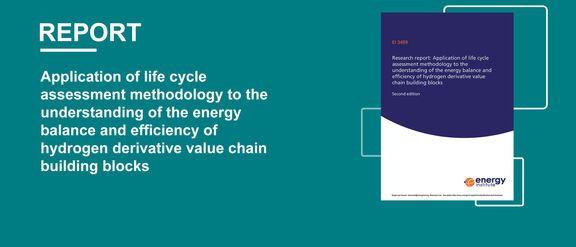
The Energy Institute (EI) has published a new research report examining the energy balance and efficiency of hydrogen derivative value chains, led and developed by Genesis experts Vivek Bhurtun, Calum Scott and David Bishop.
The report, Application of life cycle assessment methodology to the understanding of the energy balance and efficiency of hydrogen derivative value chain building blocks, provides an independent, evidence-based assessment of how energy is consumed and lost across hydrogen derivative pathways, from production through transportation to end-use.
The research builds on earlier EI work to provide a transparent, technology-neutral methodology for evaluating and comparing the performance of key hydrogen derivatives. The findings will help industry stakeholders make informed engineering, commercial and policy decisions as hydrogen markets continue to evolve.
Understanding hydrogen derivative pathways
Hydrogen is expected to play a significant role in the energy transition, particularly in sectors where direct electrification is difficult. However, transporting hydrogen over long distances and delivering it to end users often requires conversion into derivative products that can be stored and moved more efficiently. These pathways can unlock new opportunities for hydrogen deployment, but they also introduce additional energy requirements and efficiency losses.
To better understand these trade-offs, the report extends the Energy Institute's established energy balance methodology to five key hydrogen derivative pathways:
- Liquefied hydrogen (LH₂)
- Green ammonia (NH₃)
- Green ammonia with cracking at destination
- E-methanol (CH₃OH)
- Liquid organic hydrogen carriers (LOHCs)
The study evaluates each pathway across three stages of the value chain:
- Production and derivative synthesis
- Transport, shipping and distribution
- End-use conversion and utilisation
Using a modular block-by-block methodology, the authors analysed the energy requirements of each process step, enabling consistent comparisons across technologies and identifying where the most significant energy losses occur.
Key findings
The research found that electrolysis remains the largest source of energy consumption across all hydrogen derivative pathways, making hydrogen production efficiency a critical driver of overall system performance.
Beyond production, pathway efficiencies are influenced by the conversion processes required to transform hydrogen into a transportable form. These include liquefaction for liquid hydrogen, ammonia synthesis and cracking, methanol production, and the hydrogenation and dehydrogenation processes associated with LOHCs. Each introduces its own energy penalty and contributes to overall pathway performance.
The study also highlights the impact of transportation and distribution. While these stages generally contribute less energy loss than production and conversion, the choice of carrier can significantly affect system efficiency. Ammonia and methanol benefit from higher volumetric energy density, offering transportation advantages for long-distance supply chains.
For liquefied hydrogen, storage and boil-off gas management emerged as particularly important considerations. Maintaining hydrogen at cryogenic temperatures presents unique operational challenges and can lead to additional losses that are less significant for ammonia, methanol and LOHC pathways.
The research further examined end-use performance across direct combustion applications, combined cycle gas turbines (CCGTs) and open cycle gas turbines (OCGTs). Direct combustion delivered the highest end-use efficiencies, followed by CCGTs, which benefit from energy recovery through steam generation.
Supporting better decisions across the hydrogen value chain
Importantly, the study does not advocate for a single hydrogen derivative pathway. Instead, it demonstrates the value of energy balance analysis as a tool for understanding complex hydrogen value chains through a consistent and transparent framework.
By quantifying losses at each stage of the process, the methodology enables like-for-like comparisons between hydrogen derivatives and helps identify the engineering levers that have the greatest impact on system performance. It also provides a strong foundation for future assessments of cost, carbon intensity and broader value chain optimisation.
The publication showcases Genesis' capabilities across hydrogen, ammonia, methanol and Power-to-X developments. Through their leadership in developing this Energy Institute research, Vivek Bhurtun, Calum Scott and David Bishop have contributed a valuable evidence base that will help industry stakeholders navigate the opportunities and challenges of the emerging hydrogen economy.
Watch the webinar replay
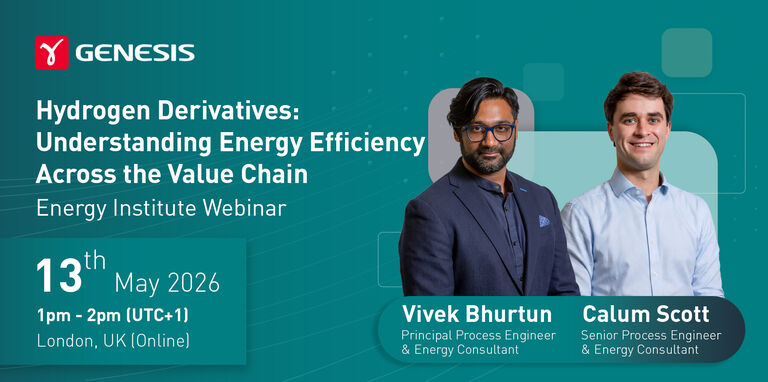
Ahead of the report's publication, Vivek Bhurtun and Calum Scott presented the findings during the Energy Institute webinar, Hydrogen Derivatives: Understanding Energy Efficiency Across the Value Chain.
The webinar explores the study methodology, key findings and practical implications for project developers, technology providers, investors and policymakers involved in hydrogen and derivative fuel projects.
Watch the replay: https://www.youtube.com/watch?v=4_5OJ9XWmdo
Get in touch
Contact us
If you require more information, please contact your local Genesis representative.